
You have no items in your cart.
-10%
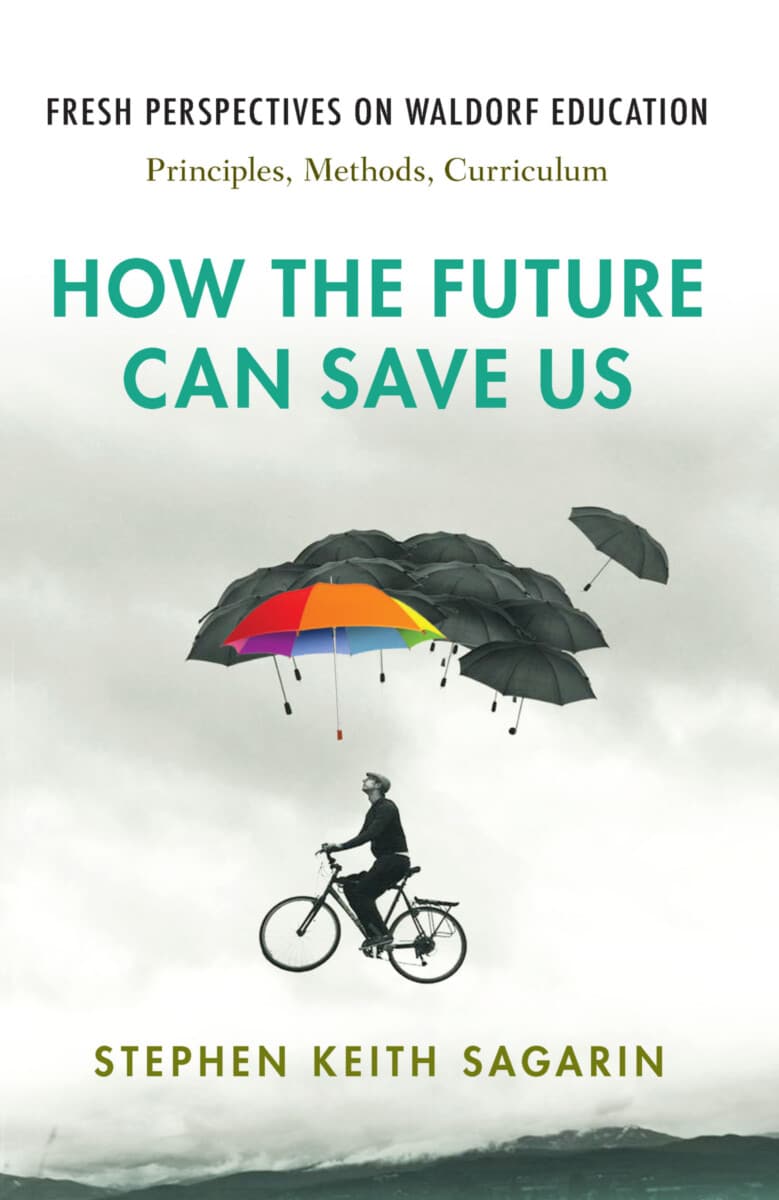
How the Future Can Save Us (eBook)
$ 7.19
How the Future Can Save Us – Fresh Perspectives on Waldorf Education: Principles, Methods, Curriculum “Education prepares us for an unknown, uncertain future. Conformity, convention, and a lack of creative thinking and action will not serve us fully to face this future. We cannot know, and can only guess, what the future will bring, and we educate truly when we educate for inspiration—for insight and creativity—in the face of the unknown. We aim not to define our students, not to pigeonhole them according to our own inevitably partial and too-narrow view of the world they will inhabit and make. We aim to educate them while leaving them free to rebel, not for no reason, but for a reason, for a cause.” —Stephen Sagarin (from the introduction) In this book, Stephen Sagarin clears away a few cobwebs to reveal the art, the living heart, and profound hope contained in the educational impulse known as Waldorf education. With brisk and insightful essays—written by a man clearly working in the midst of his subject matter—he moves through seven core themes of youth education—growth, method, curriculum, terms, principles, governance, and administration—and ends with a hopeful look at the future. Employing pithy observations, bold myth-busting insights into key terms (what they mean and do not mean, including “math gnomes”), child development, and much more, How the Future Can Save Us is an engaging and exciting read for both new and experienced teachers, parents and caregivers, and any student of education. It offers a fresh, hopeful, unconventional, and reinvigorating take on Waldorf education—where it comes from, what it means today, and how it still holds promise for the future. C O N T E N T S: Introduction Growth 1. Protection and Liberation 2. Growth and Learning in Three Easy Graphs! Method 3. Back-to-Basics (“Main Lesson”) Teaching According to Steiner’s Method 4. Telling Tales in Waldorf Schools 5. Teach to the Top. Aim for Epiphany 6. Good Teachers Don’t Answer Their Own Questions 7. Stop Moving: “All Thoughts Previously Planted in the Head Simply Fly Away…” 8. Taking Notes: A Mind-Splitting Practice 9. No Apologies for a Life of Doodling 10. Rhythm and Meaning 11. The Curious Case of the Missing Methods 12. Moving through a School Day Curriculum 13. Free the Math Gnomes 14. Teaching Arithmetic Without Gnomes 15. What Would Steiner Say…about Painting with Children? 16. “Where Does Steiner Say We Have to Teach Stories of the (Catholic) Saints in Second Grade? 17. Do You Have to Teach Norse Myths in Waldorf Schools? 18. After the “Nine-Year Change” 19. Some Facts Are Just Beliefs in Sheep’s Clothing 20. Rudolf Steiner’s Only Known Reference to a Nature Table Terms 21. What Does Rudolf Steiner Mean by “Soul”? 22. What Does Rudolf Steiner Mean by “Etheric Body”? 23. What Does Rudolf Steiner Mean by “Spirit”? 24. What is Anthroposophy? Principles 25. Beyond Myth-Busting 26. Polarities: The Valuable Act of Imagination 27. How to Ruin the Soul of the Child Governance and Administration 28. Threefold Social Organization and Waldorf School Governance 29. You Can’t Always Get What You Want 30. More on Administration 31. Beware “First Grade Readiness” 32. How Many Waldorf Teachers Actually Teach the Same Elementary School Class for Eight Years? 33. Have Better Faculty Meetings Now! The Future 34. What’s Essential: Five Gifts of a Steiner School Education 35. Chasing Insight Is Hard and Joyful Work 36. The Future of Waldorf Education 37. Is Your School a Dinosaur? The Future of Education in the United States Endnotes References About the Author Stephen Keith Sagarin, PhD, is faculty chair, a cofounder, and a teacher at the Berkshire Waldorf High School in western Massachusetts, where he teaches history. A former teacher and administrator at the Great Barrington Rudolf Steiner School and the Waldorf School of Garden City, New York, the high school from which he graduated, Dr. Sagarin writes, lectures, mentors teachers, and consults with Waldorf schools on teaching and administration. An associate professor and Director of the Waldorf High School Teacher Education Program at Sunbridge Institute, New York, he is also the former editor of the Research Bulletin of the Research Institute for Waldorf Education and has taught history of education at Teachers College, Columbia University; human development at the City University of New York; and U.S. and World History at Berkshire Community College, Massachusetts. Dr. Sagarin holds a BA in art history from Princeton University and a PhD in history from Columbia University. He is married and the father of two.
Related Products
-
-19%

Virna Korvakoru Musta coruu
$ 25.63 -
-10%

-
-40%

-
-20%

Top rated products
-
 Feather Korvakoru Musta Coruu $ 25.63
 -
 Elea Korvakoru Musta Coruu $ 25.63
 -

-
 Kindness Garnet Gold Earrings $ 61.70
 -